
What’s the story?
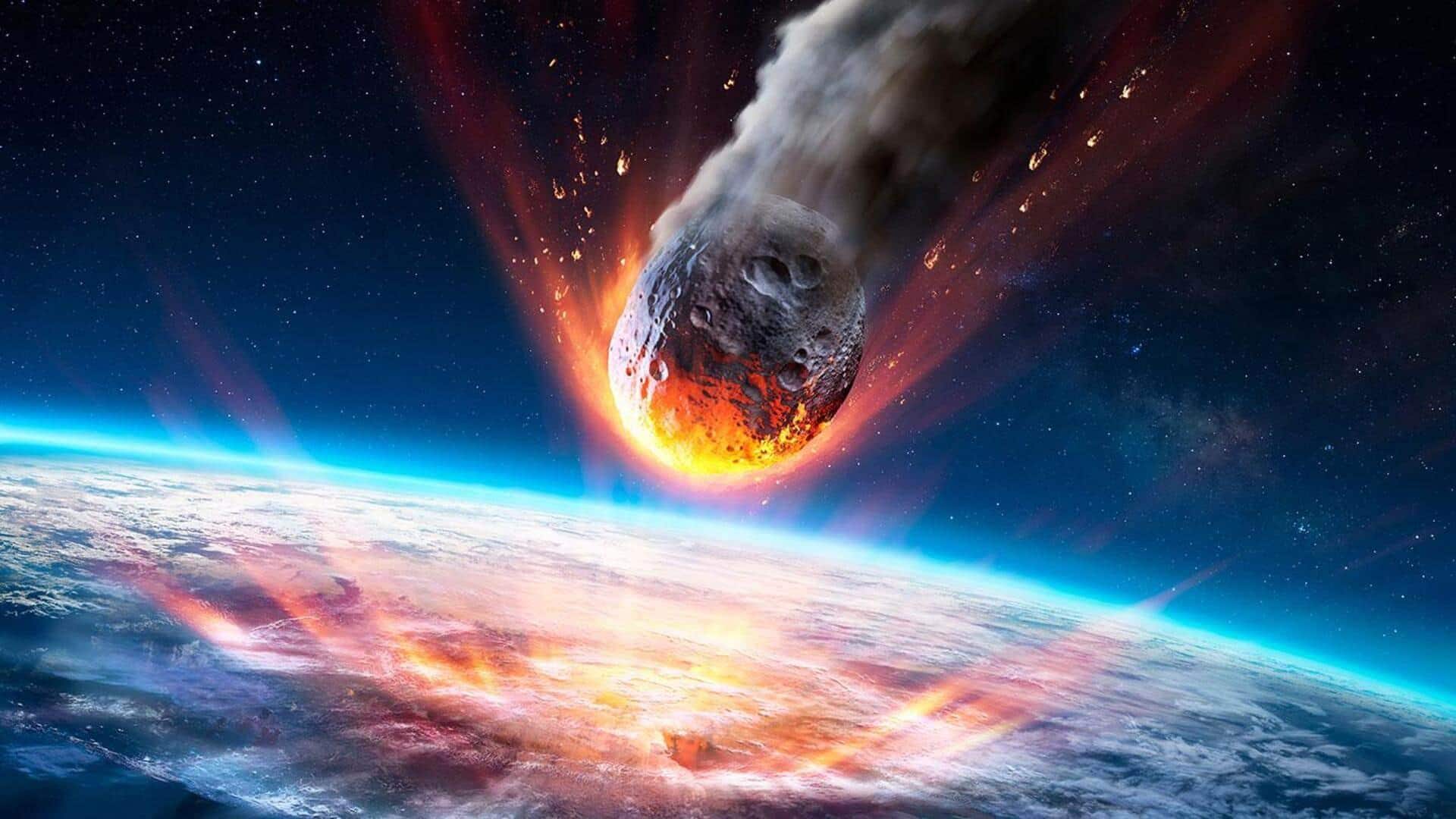
Recent research has shown that certain types of asteroidespecially those high in iron, may pose a greater threat to the planet than previously thought. This research was carried out by an international team of scientists, nature communications. This highlights that these space rocks can absorb more energy without breaking down, becoming even harder in the process.
Iron-rich asteroids: a new threat to Earth
The study focused on M-type asteroids, or metal-rich asteroids, and their potential impact on Earth. These space rocks are part of the Near Earth Asteroid (NEA) group, which includes 37,000 known objects. solar system.
NASA Space agencies such as the United States are closely monitoring these objects and assessing the potential threat they may pose to Earth.
Research reveals M-type asteroids can absorb more energy
The researchers conducted a simulation using CERN’s Highly Radioactive Materials (HiRadMat) facility, which irradiated a sample of iron meteorites. They used a high-energy 440 GeV proton beam to study how much stress these metal-rich asteroids (type M) could withstand as they entered Earth’s atmosphere. Real-time data acquired by a Doppler vibrometer showed that as the stress level increases, the material responds by releasing more energy.
Asteroid’s internal structure may amplify stress
The results suggest that energy is likely traveling deep into the asteroid, changing its internal structure and amplifying stress. Professor Gianluca Gregory oxford university Co-author of the research paper said this is “the first time we have been able to observe non-destructively and in real time how an actual meteorite sample deforms, strengthens and adapts under extreme conditions.”
Impact on asteroid deflection missions
The results of this study could have major implications for asteroid deflection missions. If a certain type of asteroid does not break up under stress and becomes even stronger, we cannot expect the asteroid to break up when it enters the atmosphere. These space rocks become even stronger under stress and could pose a greater threat to Earth than previously thought.