
A University of Nottingham astronomer has been awarded the Leverhulme Prize for his research into supermassive black holes.
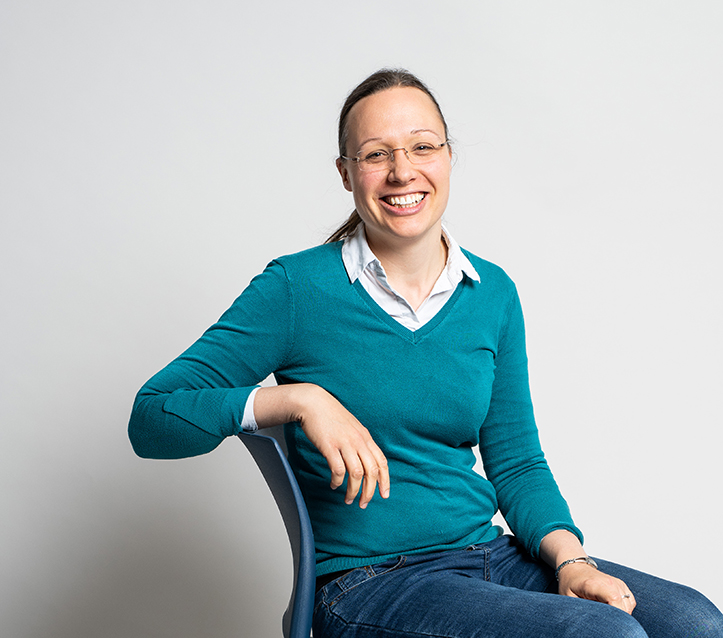
Dr Helen Russell, from the University of Nottingham’s School of Physics and Astronomy, has been awarded almost £1 million from the Leverhulme Trust for her research project ‘The physics behind feedback from supermassive black holes’.
Dr. Russell will conduct his research using a new space observatory developed by NASA and the Japanese space agency. The newly launched XRISM satellite carries the most advanced X-ray spectrometer ever flown, and Dr Russell is the only UK-based astronomer to win observation time in the science programme’s first call for applications.
This observation reveals how supermassive black holes shape galaxies in the universe around us. With new support from the Leverhulme Trust, Dr Russell will recruit a team to build on this exciting opportunity with an extensive program to analyze observations and understand black hole feedback as new data arrives.
Over the past 30 years, “feedback” has been the most important discovery in understanding the origin of the structure of the universe. Gravity attracts mass to form stars and galaxies like our Milky Way. But if the model included only gravity, galaxies would grow too large and form too many young stars. Energetic bursts from supermassive black holes, known as black hole feedback, are thought to be the missing link in our understanding. XRISM is now poised to reveal how these explosions can efficiently heat galaxies and drive gas from them, thereby putting a brake on galaxy growth over cosmic time.
Dr. Russell has extensive experience working at NASA and is part of a team conducting research and development of the proposed next-generation X-ray satellite, AXIS (Advanced X-ray Imaging Satellite). AXIS, launched in the early 2030s, will reveal the origins of supermassive black holes, their increasing feedbacks across galactic populations, and the end of stellar explosions. Dr. Russell leads the Galactic Science Working Group, which is developing the AXIS science and observational program for stellar and black hole feedback in nearby galaxies and metal enrichment in the hot, diffuse Universe.
The Leverhulme Prize is aimed at researchers in the early stages of their careers whose research has had an international impact and whose future research career is highly promising.
Dr Russell, who works in the fields of physics, astronomy and mathematics at the University of Nottingham, joins a growing list of female scientists to receive this award. They all study different aspects of the universe and its origins.
Dr Russell commented: “I am delighted to have won this award. It will enable us to expand our research team and pursue new discoveries. It is a great honor to be one of the few European astronomers to be awarded the new XRISM observations, and I am very much looking forward to seeing what new insights will be revealed about black holes and their role in the universe.”
Professor Mark Fromhold, Head of the Department of Physics and Astronomy, said: “We are extremely proud of Leverhulme’s excellent track record in attracting funding. Our female researchers are demonstrating world-class ability and, just as importantly, providing role models for young people pursuing physics and astronomy as research interests or potential careers.”
/Open to the public. This material from the original organization/author may be of a contemporary nature and has been edited for clarity, style, and length. Mirage.News does not take any institutional position or position, and all views, positions, and conclusions expressed herein are those of the authors alone. See full text here.