
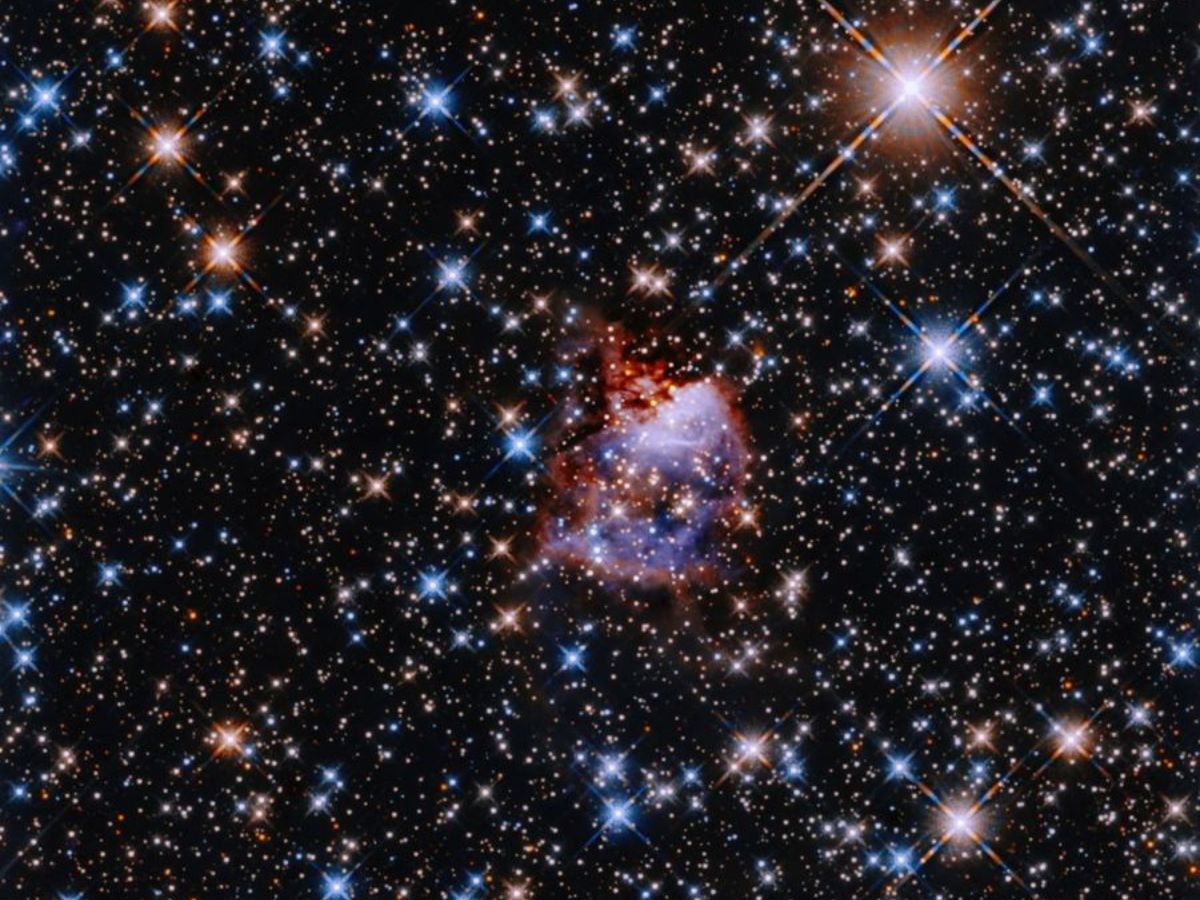
NASA’s Hubble has captured images of a protostar covered in thick dust. These are stars in their formative years. They form in the form of thick dust, making them difficult to see in visible light. But Hubble can detect near-infrared radiation through holes called outflow cavities. Outflow cavities are formed by jets of gas and dust flowing out of the star.
Cepheus A is one of the regions visited by Hubble during this study. This is a massive star-forming region located about 2,400 light-years away in the constellation Cepheus. Although there are several baby stars in this region, about half of the region’s brightness comes from the light of one large protostar. A pink and white nebula can be seen in the image. The pink area is the HII area. It is formed when ultraviolet light from a nearby star ionizes the surrounding hydrogen gas, causing it to emit light. Most of the star is hidden in this image, but its light shoots out of the outflow cavity.
This star-forming region is located within our Milky Way galaxy. It is called G033.91+0.11. The bright spot in the center of the image is a reflection nebula. It is a region that scatters and reflects light from hidden stars.
This image reveals something else: an emission nebula. The emission nebula is just to the right of the center of the image. Emission nebulae are formed when light from a protostar ionizes the surrounding gas, causing it to glow. The area shown in this image is GAL-305.20+00.21.
The final image in this Hubble collection shows the giant protostar IRAS 20126+4104. This is a B-type protostar located in a massive star-forming region approximately 5,300 light-years away in the constellation Cygnus.
These Hubble images were taken as part of the SOFIA Massive (SOMA) star formation survey. The study specifically targets massive stars with masses more than eight times that of the Sun. Scientists aim to use this research to understand how these massive stars form.
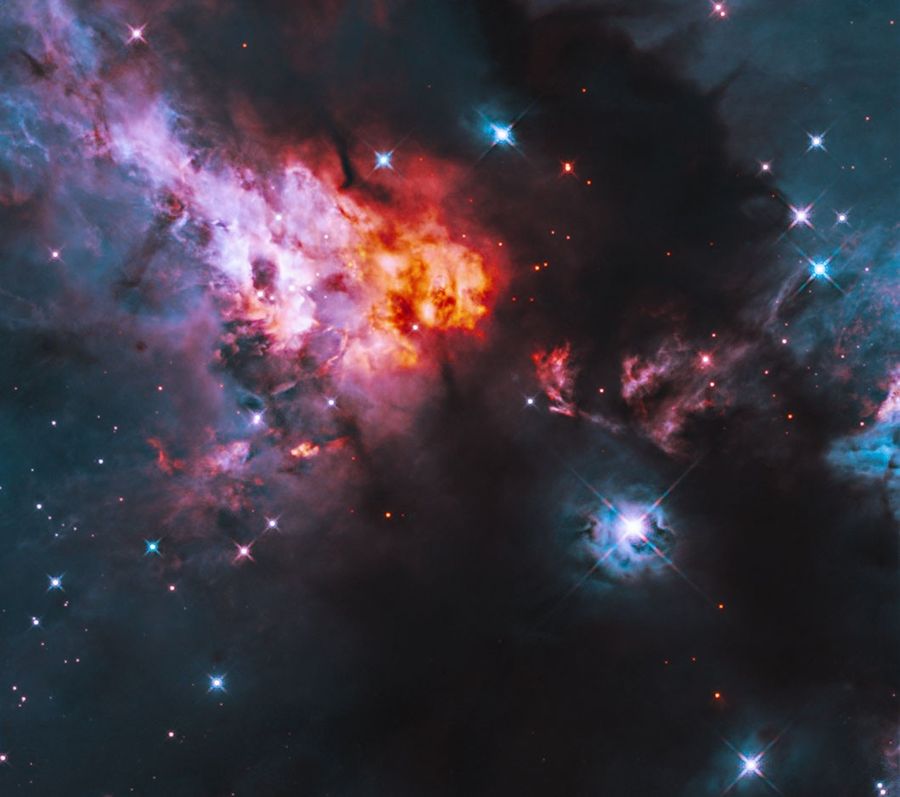
Image sources: NASA, ESA, R. Fedriani (Andalusian Institute of Astronomy). Processing: Gladys Kober (NASA/Catholic University of America)

Throughout my life, I have always been fascinated by and even addicted to technology and digital devices. I’m always amazed at the complexity of the simplest digital devices and systems around us. I’ve been writing and publishing online for about six years, but just over a year ago I found myself falling in love with the wonders of the smartphones and laptops we have in our hands every day. I developed a passion for learning about new devices and the technology that goes with them, and at some point I asked myself, “Why not get involved in writing about technology?” It’s no use saying that I followed up on that idea – it’s obvious. I am an open-minded person who finds endless joy in researching and discovering new information. I believe there is a lot to learn and life is very short, so I use my time wisely to learn new things. I’m a “bookworm” of the internet and digital devices. When I’m not writing, you can find me on your devices. I explore and admire the beauty of nature and living things. I am a quick learner, adapt quickly to change, and always look forward to new adventures.