
IT WAS ABOUT FIVE IN THE MORNING on April 1, 2025, when Antoine Archambault heard his four-month-old son, Isaac, fussing from the bedside crib inside their first-floor suburban Paris apartment.
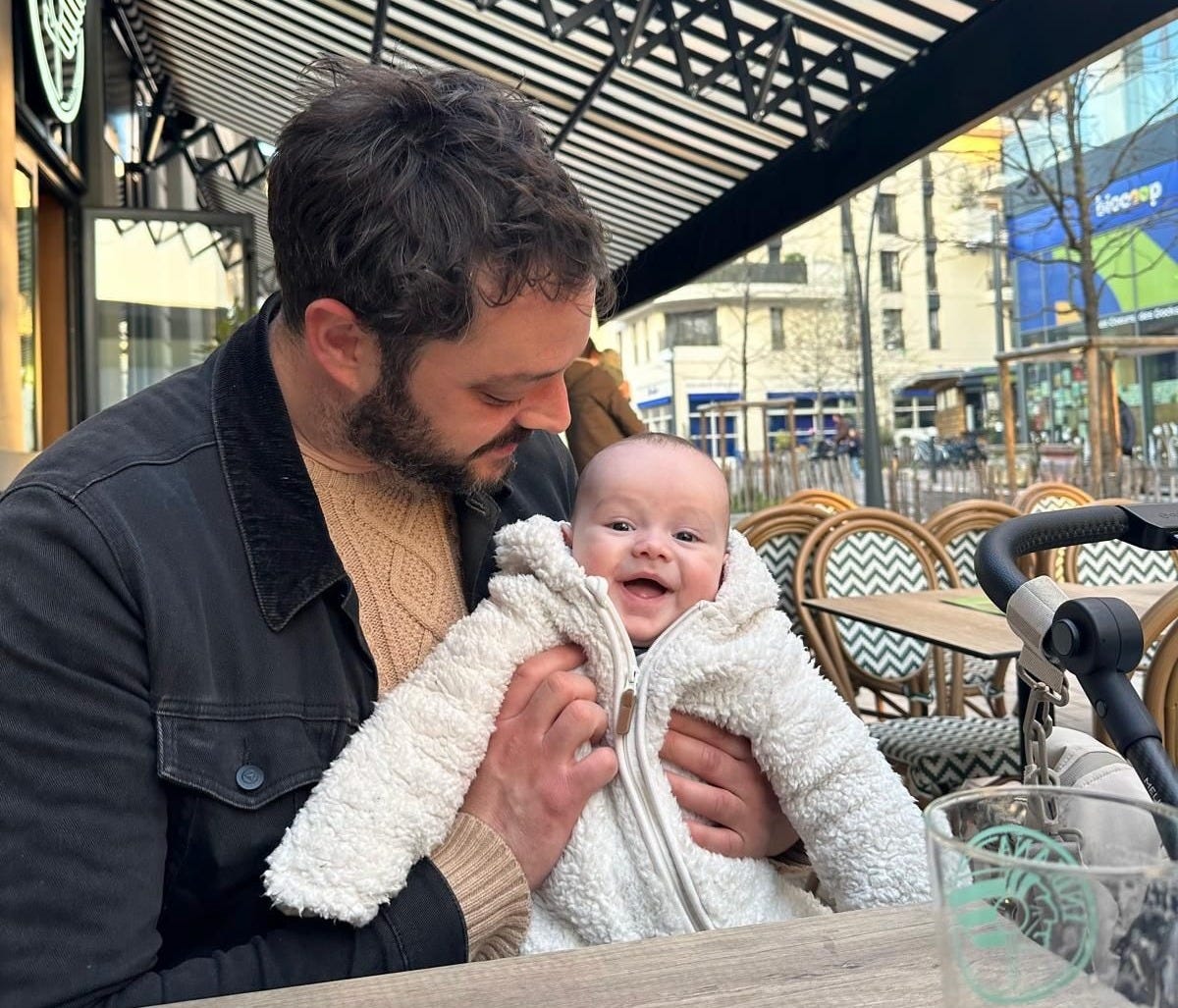
It was more of a whimper than a wail, as Antoine recalls it, which was pretty typical for a baby even strangers said was unusually upbeat and given to giggling. Isaac was running a fever, but it was a mild one. Antoine gave him paracetamol (acetaminophen) and soon Isaac fell back asleep, seemingly at peace in his fuzzy sleep sack.
Antoine headed back to bed, hoping to get a little more rest before daybreak. But soon Isaac was up again, because the fever wasn’t going away. Claire Fauvet—Antoine’s partner and Isaac’s mother—had to take an early train to Strasbourg for work, so Antoine bundled up the baby for a short walk to a nearby medical clinic. Father and son arrived right as the doors opened at 8 a.m. and Antoine had no reason to think Isaac had anything more than a routine illness—until staff called an ambulance, for speedy transfer to the university children’s hospital.
Why, a panicked Antoine wanted to know. Because, a doctor told him, Isaac might have meningococcal disease.
Meningococcal disease is the ultimate nightmare for pediatricians, and for parents who know about it. It is caused by Neisseria meningitidis, a bacterium that can invade the bloodstream, the spinal cord, or both. It is spread through close contact with respiratory or oral secretions, colonizing nasal and throat linings. Many people carry it harmlessly.
But in rare cases it transforms into invasive disease, striking even healthy people with shocking speed. In a matter of hours, what seems like a routine, flu-like illness transforms into a full-body emergency of shock, blood clotting, and swelling of the brain. Between 10 and 15 percent of those who get meningococcal disease will die, even with rapid treatment. Many more will suffer permanent physical or cognitive impairments.
Antoine knew a bit about the disease, he explained to me, because he remembered a documentary he had seen about a paralympic swimmer who’d lost the outer parts of all four limbs as a child. Antoine also recalls thinking that Isaac was protected against it, because he and Claire were so diligent about getting Isaac his immunizations as soon as he was eligible. “I texted Claire, they suspect meningitis, but wasn’t he vaccinated?” Antoine told me. “And Claire was like, yes he is.”
But France’s “schedule”—the list of vaccines required for public child care and school, and covered by national health insurance—had until recently excluded one of the two available meningococcal shots, each one being necessary for protection against different biological strains. A new requirement for the second version had taken effect on January 1, right after Isaac was born, and his appointment to get the vaccine was on the books. But it was not for another six weeks. That meant he remained at the mercy of the community around him, which—without widespread vaccination—included plenty of meningococcal carriers. Evidently one had given it to him.
The next few hours remain a blur, Antoine told me. “I lost my footing, I lost my step, my legs were shaking all day,” he said, reaching for the English words to capture a state of mind as much as anything physical. Less than twenty-four hours before, Antoine had been playing with Isaac at an outdoor café, drawing out the baby’s smile with a favorite stuffed monkey that played music when you squeezed it. When Claire had rocked Isaac to sleep by holding him close to her chest, in what had become their routine, he had seemed absolutely fine. Now doctors were putting him into a medical coma, which they said was his best hope for survival.
Claire, who had rushed back to Paris by train, arrived at the hospital not long after that and for a while it looked like treatment might work. Isaac’s vital signs even improved for a bit. But the recovery was illusory and his condition deteriorated.
His heart stopped three times. Doctors were able to revive him after the first two. They were not after the third. At 6:35 p.m., Isaac was gone.
EARLIER THIS MONTH, Health and Human Services Secretary Robert F. Kennedy Jr. announced the CDC would be removing several vaccines from the list that it recommends for all American children. Among those CDC took off the list is the newer meningococcal vaccine, which has an excellent safety record and since its introduction had reduced the incidence of the disease in this country by 90 percent.
Under the new guidelines, the agency recommends the shot only for high-risk groups (like people who are immunocompromised or college freshmen living in close quarters). For others, the agency suggests “shared clinical decision-making,” meaning parents should discuss with their doctors whether the shots are advisable for their children.
Exactly how much will change—and exactly when—is hard to say. Insurers will continue to pay for the vaccines, administration officials said, as will a government-run program that administers immunizations to low-income children. Decisions about whether to require shots for school will remain with states, as they always have.
But physicians, state officials, and insurers all use CDC recommendations to guide their own decisions and advice. That’s one reason the recommendations matter so much, including to people like Kennedy with long histories of hostility to vaccines. Another is that the guidelines make it possible for Americans without medical training to know what the nation’s most trusted scientists believe, based on their assessment of the latest and best available research.
Or at least that’s how it is supposed to work. This month’s retrenchment on vaccine policy—arguably the biggest in American history—is not based on new data or research that’s suddenly become available. Rather, it is based on a reassessment ordered up by Kennedy’s boss, President Donald Trump, that compared U.S. recommendations to those in peer countries around the world. “After an exhaustive review of the evidence,” Kennedy said in a statement, “we are aligning the U.S. childhood vaccine schedule with international consensus while strengthening transparency and informed consent.”
Like so many other arguments Kennedy has made about vaccines, this claim about “consensus” is simply not true. In reality, vaccine recommendations vary across Europe, North America, and Asia, even among peer countries. Before the Trump administration issued its directive this January, the United States was at the high end of the spectrum, with a recommendation of immunization against seventeen diseases. Now it’s at the low end, with a recommendation for twelve—or just one more than Denmark, the European country with the fewest.
This is no coincidence. Trump administration officials have said repeatedly that Denmark was their model, and arranged for a full presentation on the Danish recommendations during December’s meeting of the committee of outsiders that officially advises the CDC. The text of the assessment memo justifying the decision that the Trump administration released in early January cites “Denmark” or “Danish” authorities thirteen times—by far the most references for any country. A coauthor of the assessment is the same physician who gave the advisory committee presentation—Tracy Beth Høeg, a sports-medicine specialist who spent part of her career in Copenhagen.
But Denmark is an odd choice to be such a singular example given its relatively tiny population of six million people living in a quasi-socialist paradise. A truly “exhaustive” review of the evidence would have also considered some of the larger countries on the continent, especially anywhere the public has been arguing about vaccines or where officials recently changed recommendations.
France turns out to be one such country—and in the case of the vaccine for meningococcal disease, an especially useful one for understanding both the policy debate and very personal meaning it has for families like Antoine’s.
THE OBVIOUS REASON to consider France is that it simply looks a lot more like the United States than Denmark does.
It has Western Europe’s third-largest economy, with a population of nearly 70 million that is literally ten times larger than Denmark’s. France doesn’t have the kind of economic inequality that you find in the United States, because no Western or Northern European democracy does, but its socioeconomic breakdown looks more like America’s than Denmark’s. Even the French health care system is a better analogue to that of the United States. It delivers universal coverage through a mixed public-private system in which access can vary depending on insurance type and wealth.
But there’s something else about France that makes its experience relevant. Like the United States, France has a vocal anti-vaccination movement, rooted partly in a political culture supportive of a strong central government but distrustful (by European standards) of the people and institutions who run them. “I think we are one of the world champions when it comes to vaccine hesitancy,” Muhamed Kheir-Taha, who directs the invasive bacterial infections unit at Institut Pasteur in Paris, told me. There’s survey data to back that up.
That tradition helps explain the evolution of French vaccine laws. When the earliest vaccines for diseases like smallpox and polio became available during the early and mid-twentieth century, France made them mandatory, meaning they were a requirement for attending school. But as newer vaccines like the measles shot became available, French authorities merely “recommended” the vaccines—which meant, among other things, the national health system didn’t always pay for them.
But agitation to change the policies reached a critical mass about twenty years ago, in part because physicians and public health experts worried vaccination rates for diseases like measles and pertussis would fall below herd immunity levels. French officials reacted by commissioning expert reports, and then convening public meetings so that the public had a chance both to hear the recommendations and offer feedback. The effort culminated in a 2017 law that added eight new vaccines to the mandatory list.
The newer meningococcal shot was initially not one of them, because for each vaccine French authorities were weighing the costs and benefits in the context of allocating money in the national health insurance system. They decided those other strains of meningococcal disease were too rare to justify the expense.
But the disease turned out to be not so rare after all, with rising caseloads and outbreaks in communal settings like schools. “We would get a lot of attention from the media for these, even when it was a single case, because they would be touching children or young adults in very good health, and then they may die within hours,” Taha said.
French authorities had a playbook for these situations: They would surge vaccination to the affected areas, aiming to protect people before they could get exposed and develop the condition, while rushing treatment to the afflicted. But meningococcal disease acts so quickly that the surges inevitably were too late for some.
“The best way to avoid this disease—we told them—is to prevent the disease, not to treat it afterwards,” Hervé Haas, president of the French pediatric infectious disease association, explained to me.
Once again, French authorities listened to the doctors and public health experts: In 2024, they added the second meningococcal vaccine to the mandatory list. The hope is that the requirement will dramatically improve uptake, which is what happened with the vaccines that France made mandatory in 2017.
THE STRATEGY THAT FRANCE ABANDONED—making the vaccine strictly voluntary, and then surging resources to stop outbreaks once they start—is similar to the one that Kennedy and the Trump administration just embraced. But if you look at that assessment memo that HHS released in January, you won’t find acknowledgement that the French recently adopted the meningococcal vaccine, let alone an explanation for why the authors believe the United States should be moving in precisely the opposite direction.
In fact, you won’t find any references to France—or any signs that memo’s authors seriously studied the experience of European countries other than Denmark. When I asked HHS about this explicitly—whether larger, more comparable nations like France, Germany, and the U.K. had been given the consideration that Denmark had—I got a boilerplate response: “Many peer nations achieve high vaccination rates without mandates by relying on trust, education, and strong doctor-patient relationships,” HHS Press Secretary Emily Hilliard wrote in an email, “and HHS will work with states and clinicians to ensure families have clear, accurate information to make their own informed decisions.”
Hilliard also described the review as “thorough,” echoing what Kennedy has said, although it is a bit difficult to take that seriously when the entirety of the assessment is just thirty pages long. And because it’s a memo justifying decisions on several vaccinations, it gives only scant attention to each. The explanatory section on meningococcal disease is just four paragraphs, or barely 200 words.
Just for comparison, the document the CDC used in 2013 when first recommending the newer meningococcal vaccine had roughly 18,000 words—on the meningococcal vaccine alone—with highly detailed reviews of research, projections of how different recommendations would play out in the real world, and other sorts of information you’d want officials to consider in making these kinds of decisions.
That document is a reflection of the work that went into it—literally years of study and debating, with the CDC director ultimately making decisions after public votes by the outside committee of experts. Nothing like that happened this year, despite Kennedy’s promises of “radical transparency.” The CDC simply announced the decision one day, without warning, with the director signing off on a recommendation he got from the heads of three other government agencies.
“Outside of a genuine emergency, our government should not be waking up in the morning, brushing its teeth, and abruptly announcing major shifts in longstanding policy,” Joshua Sharfstein, a pediatrician and former deputy FDA commissioner now on faculty at Johns Hopkins University, told me. “The basis for changing course should be released well in advance, reviewed by independent experts, and modified as needed through careful consideration and explanation. It is a process with integrity that distinguishes thoughtful policymaking from a power grab.”
TO RATIONALIZE ITS DECISION, the Trump administration memo cites a report from the World Health Organization, which recommended society-wide vaccination only in countries where the case level is higher than it is in the United States. But the primary audience for WHO guidance is officials trying to make the most of scarce medical resources.
That’s not the way things work here, for better or worse depending on your perspective. The American system throws all kinds of money at saving lives—even for interventions that cost way more than vaccination—because that’s what wealthier countries do when they want to prioritize health.
“Once you’ve seen a case of meningococcal disease, you are thinking my god, I never ever want to see a case like that again,” Rochelle Walensky, the Harvard-affiliated pediatric infectious disease specialist and former CDC director, told me. “When you have seen a completely viable, young, vibrant person who suddenly obtunded [meaning barely responsive] with bacterial meningitis—and you know their life will never be the same—then the answer is that if there is anything I can do to prevent this, if I can prevent it safely, you’re going to do it.”
One other person who understands all too well the menace of the disease is Antoine. And he wants to do something about it. He and Claire have raised money to support research into the disease and to promote training for medical professionals, so they are better able to recognize it quickly. They’ve worked with local and national groups that are affiliated with the Confederation of Meningitis Organisations, a U.K.-based international organization trying to promote awareness and research worldwide.
They’ve also tried to do what they can to spread the word about the vaccine among friends and professional contacts. (Antoine is a consultant who works with banks on regulatory compliance, and Claire a lawyer.) Antoine told me he got “pretty pissed off” recently when he heard a friend got advice from a doctor not to get the shot, because they were not part of a high-risk group. “This is a big fight for us.”
Before our video call ended, Antoine shared some photos, all of them with Isaac smiling in exactly the way I had been told. And when Antoine was done recounting that awful day last April, he told me about the quiet memorial service they held at the hospital—and the burial, with about a hundred family and friends present. Antoine said that he and Claire were careful to bundle Isaac in his favorite blanket with sheep and stars on it, and to make sure he had his beloved stuffed monkey with him. The cemetery is near their apartment. Antoine said he visits every day.